
From the moment Khamenei’s death was confirmed, US President Donald Trump framed it as an opportunity. His public calls for Iranians to rise up and take over their government reflected a longstanding belief in some American foreign policy circles that the Islamic Republic is ripe for collapse if given the right push. History, however, suggests significant grounds for skepticism.
American attempts to catalyze regime change in Iran have a checkered record going back decades. Economic sanctions, designed in part to create conditions for popular uprising, have instead strengthened the IRGC’s economic dominance and given the regime a convenient external enemy to blame for domestic hardship. Covert operations and support for opposition groups have repeatedly failed to build effective alternative power structures inside the country.
The current moment is different from previous opportunities in some important respects. The combination of a leadership vacuum, active war, the memory of January’s massacre, and the IAEA’s observations about continued nuclear activity creates a genuinely unprecedented pressure point. The scale of casualties in January’s crackdown has produced a depth of alienation that may be qualitatively different from previous protest cycles.
But the structural obstacles to regime change remain formidable. There is no organized opposition with genuine domestic roots. The IRGC is intact and motivated. The security apparatus has demonstrated repeatedly that it will use whatever force is necessary. And the history of American-sponsored regime change in the Middle East — from Iraq to Libya — provides little reason for confidence about what follows if the current system collapses.
Trump’s public statements, whatever their rhetorical effect, are also likely to be counterproductive with many Iranians who might otherwise be sympathetic to political change but are deeply suspicious of American intentions based on historical experience including the 1953 coup that overthrew a democratically elected government.
Trump’s Bet: Can Washington Turn Iran’s Crisis Into Regime Change?
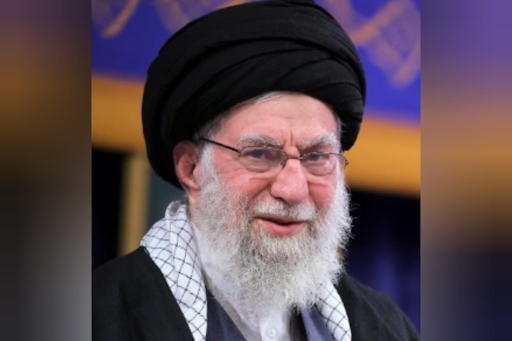
Photo by khamenei.ir, via wikimedia commons
64