
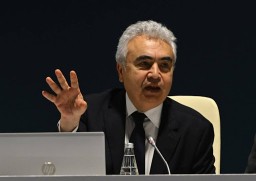
Fatih Birol, the head of the International Energy Agency, has left Australia with a warning about the global energy crisis caused by the Iran war that is likely to resonate in policy circles and energy markets for years to come. Speaking in Canberra before departing from his Asia-Pacific tour, the IEA chief delivered one of the most comprehensive and sobering assessments of the global energy situation in the agency’s history. He described the crisis as the combined equivalent of the twin 1970s oil shocks and the Ukraine gas emergency — and called it the most serious energy emergency the world had ever faced.
Birol had spent several days in Australia, meeting with Prime Minister Anthony Albanese and briefing journalists, business leaders, and government officials about the depth of the crisis. He used the platform to deliver a series of warnings that collectively painted a picture of an energy system under extraordinary stress, a world that was inadequately prepared for the scale of what had happened, and a global response that needed to be faster, larger, and more genuinely coordinated than anything yet seen.
The conflict began February 28 with US and Israeli strikes on Iran and has since removed 11 million barrels of oil per day and 140 billion cubic metres of gas from world markets. At least 40 Gulf energy assets have been severely damaged, and the Hormuz strait — through which approximately 20 percent of global oil flows — remains closed. The IEA deployed 400 million barrels from strategic reserves on March 11 in its largest emergency action, with further releases under active consideration.
The IEA chief called for demand-side policies including remote work, lower speed limits, and reduced commercial aviation. He expressed concern about fuel hoarding by individual nations, called for Gulf Arab producers to maximize output, urged Asia-Pacific nations to develop stronger regional energy security frameworks, and insisted that reopening the Hormuz strait was the single most critical step toward genuine market stabilization.
Trump’s 48-hour ultimatum to Iran to reopen the strait had expired without resolution, and Tehran had threatened retaliatory strikes on US and allied energy and water infrastructure. Birol departed Australia without knowing when or how the crisis would be resolved — but with the clear conviction that the world was at an energy crossroads, that the choices made in the coming weeks would shape global energy security for a generation, and that the only path through was genuine, ambitious, and sustained international cooperation. His warning, delivered from the other side of the world from the crisis’s epicenter, carried the full weight of the most serious global energy emergency in modern history.