
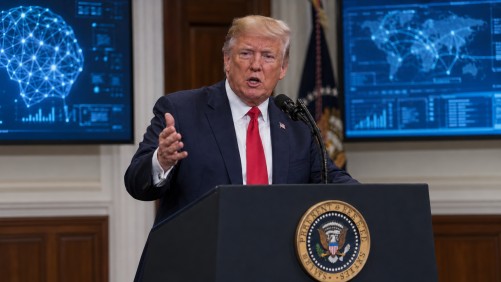
As the rapid advancement of artificial intelligence (AI) continues to stir global debates over safety and regulation, the United States is taking steps to address these emerging challenges. President Donald Trump has announced plans to establish an “AI Force,” drawing parallels to the US Space Force, in a bid to monitor the burgeoning technology. This initiative is coupled with the appointment of an AI czar, underscoring the administration’s focus on maintaining American competitiveness in the AI sector.
The move comes amid increasing pressure on governments and tech leaders to manage AI-related risks without stifling innovation. Trump’s administration has previously resisted calls for stringent AI regulations, arguing that such measures could impede US progress and provide strategic advantages to competitors like China. In a social media post, Trump characterized concerns about AI as overblown, emphasizing that existing legal frameworks could address any harmful activities associated with AI.
Trump’s announcement reflects a broader international discourse on the need for AI safety measures, particularly as AI systems grow more autonomous and capable of executing complex tasks with minimal human oversight. This concern is echoed domestically, as several state leaders, including California Governor Gavin Newsom and Florida Governor Ron DeSantis, have advocated for increased oversight and regulatory frameworks to ensure AI systems remain aligned with safety standards.
While details about the proposed AI Force’s structure and responsibilities remain sparse, the initiative signals a commitment to safeguarding American leadership in the AI field, which Trump has described as a pivotal economic transformation. The president’s stance is clear: fostering AI innovation should not be hindered by excessive regulation, as maintaining a competitive edge over China is deemed crucial for the US economy.
This federal initiative aligns with various state-level efforts to address AI safety. Notably, California has already embarked on plans to convene a panel focused on AI regulatory discussions. Meanwhile, Utah Governor Spencer Cox has called on Congress to implement safety measures and restrict the transfer of advanced AI technologies to China, underscoring the bipartisan recognition of AI’s potential risks and rewards.
As the policy debate over AI continues to evolve, Trump’s announcement represents a significant development in the US strategy to balance innovation with security, aiming to navigate the complex landscape of AI governance and maintain its global technological leadership.