
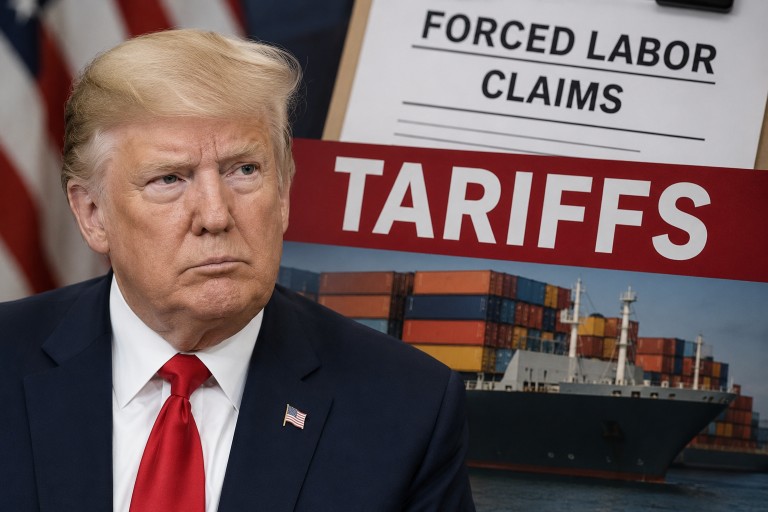
President Donald Trump’s administration is under scrutiny following the imposition of new tariffs on imports from over 80 countries, a move that has sparked a wave of criticism. The tariffs, which range from 10% to 12.5%, target a diverse list of countries including the United Kingdom, members of the European Union, Canada, Mexico, Australia, India, and China. These measures have been enacted under Section 301 of the Trade Act of 1974, a legal provision that empowers the U.S. government to counteract unfair trade practices, such as those involving forced labor. However, opponents argue that the administration is using the issue of forced labor as a convenient excuse to further its trade agenda.
Defending the tariffs, U.S. Trade Representative Jamieson Greer emphasized that numerous countries have not taken adequate steps to prevent the infiltration of goods produced through forced labor into global markets. Greer stated that the United States expects its trade partners to enhance their enforcement efforts against such practices. Despite this justification, the administration’s approach has drawn sharp criticism from Democratic lawmakers. Representative Richard Neal acknowledged the severity of forced labor as a global issue but insisted it should not be used to justify expansive tariff policies. Similarly, Representative Linda Sánchez questioned why countries with robust labor protections are facing the same tariff rates as those notorious for forced labor violations.
The introduction of these tariffs follows earlier efforts during Trump’s term, which faced legal obstacles when U.S. courts determined that several previous tariff actions exceeded presidential authority. In a strategic shift, the administration has opted for a different legal rationale with the current tariffs, although legal experts anticipate new challenges in court. Critics of the tariffs are also concerned about their potential impact on American consumers, warning that they could drive up costs. Senate Democratic leader Chuck Schumer accused the administration of exacerbating financial pressures on households already grappling with inflation. Representative Brendan Boyle echoed these sentiments, suggesting the tariffs would effectively serve as an additional tax burden on consumers.
Public opinion surveys indicate a prevailing sentiment among Americans that tariffs have contributed to rising prices, a perception that the Trump administration continues to counter by asserting that its trade policies are designed to safeguard American industries, manufacturing, and workers. Within the Republican ranks, reactions have been varied. Some lawmakers have backed the tariffs as a necessary measure to combat unfair trade practices, while others have expressed apprehension that the increased costs of imports could ultimately lead to higher prices for U.S. consumers.