
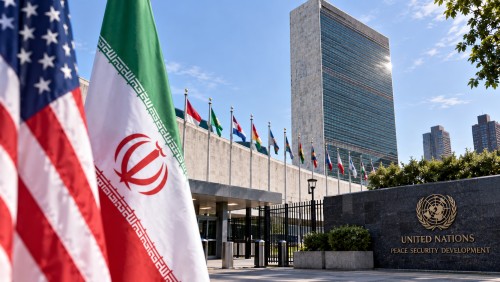
As tensions persist between the United States and Iran, the U.S. has decided to permit senior Iranian officials to attend the upcoming United Nations General Assembly in New York. This decision comes amid ongoing diplomatic efforts to address the conflict that began earlier this year, following military strikes involving the U.S., Israel, and Iran.
According to the U.S. State Department, a core delegation from Iran will be allowed to participate in the assembly under the obligations of the 1947 UN headquarters agreement. This agreement typically ensures that foreign diplomats are granted access to the United Nations, although the U.S. reserves the right to deny visas on grounds of security, terrorism, or foreign policy. Iranian President Masoud Pezeshkian and Foreign Minister Abbas Araqchi are among those expected to receive visas, albeit with certain travel restrictions.
The Iranian officials will face limitations consistent with previous U.S. policies, which restrict their movement to designated areas such as the UN headquarters, Iran’s UN mission, and the residence of its ambassador. Additionally, there will be constraints on their ability to purchase specific goods while in the United States.
This decision occurs as Washington and Tehran engage in intermittent diplomatic discussions to resolve the conflict that erupted in late February, marked by Iranian retaliation against Israel and U.S. military bases in Gulf states. Despite these diplomatic overtures, the U.S. has simultaneously opted to deny entry to Palestinian officials, including President Mahmoud Abbas, for the same UN event.
The ongoing situation underscores the complexities of international diplomacy, particularly when balancing obligations under international agreements with national security concerns. As the UN General Assembly approaches, all eyes will be on how these diplomatic engagements unfold amidst the broader geopolitical tensions.