
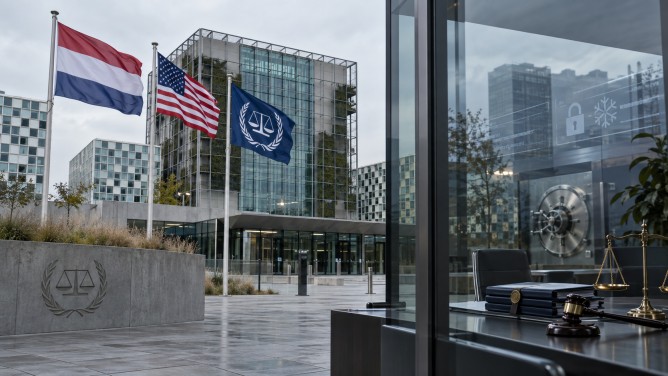
In the midst of rising tensions between the United States and the International Criminal Court (ICC), the Netherlands is gearing up to address potential new US sanctions against the tribunal. The Dutch government is strategizing ways to ensure the ICC can continue its critical work despite possible disruptions to its financial and operational systems.
The Trump administration, having already imposed sanctions on several ICC officials, is contemplating extending these measures to the institution itself. This move stems from US objections to the ICC’s investigations involving American and Israeli officials, with Washington accusing the court of overstepping its jurisdiction.
Should sanctions expand, they could severely affect the ICC’s ability to engage with US-based companies and services, impacting key areas such as banking, insurance, and technology. In response, the ICC is proactively shifting some of its services away from US providers and reassessing its financial and technological dependencies.
As the host country of the ICC, the Netherlands is considering how to support the court if its access to essential services is hindered. This includes ensuring the payment of staff, safeguarding witnesses, and maintaining the functionality of detention facilities. The Netherlands has previously engaged in discussions about mitigating the impact of any sanctions, highlighting its commitment to the ICC’s mission.
Established in The Hague in 2002, the ICC is tasked with prosecuting individuals charged with severe crimes, such as genocide and war crimes, when national systems are unable or unwilling to act. The looming threat of expanded US sanctions underscores the challenges faced by international institutions in navigating geopolitical disputes while striving to uphold justice and accountability.