
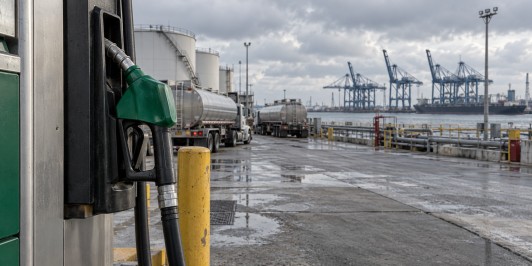
As the United States grapples with escalating energy costs and unprecedented diesel prices, President Donald Trump has thrown his support behind the idea of limiting diesel exports. The move comes amid a turbulent global energy landscape, with conflicts in Iran and Ukraine significantly disrupting fuel supplies. The price of diesel in the U.S. has soared to a record average of $6.53 per gallon, intensifying calls for domestic policy shifts.
During a meeting with Ukrainian President Volodymyr Zelenskyy, Trump highlighted the substantial diesel production in the U.S. and suggested that retaining more of the fuel domestically could be beneficial. Treasury Secretary Scott Bessent confirmed that the administration is considering the feasibility of a partial or complete export ban, taking into account the nation’s refining capacity.
The idea of restricting diesel exports, however, is met with caution from industry stakeholders. The American Fuel and Petrochemical Manufacturers trade group has expressed concerns about potential repercussions. According to the group, limiting exports could prompt U.S. refiners to decrease production, which might inadvertently lower supplies of both diesel and gasoline.
Adding to the complexity, Trump noted apprehension over recent Ukrainian strikes on Russian oil refineries. He warned that such actions could further strain global refining infrastructure, exacerbating the rise in diesel prices. This geopolitical tension underscores the delicate balance the U.S. must maintain in its energy policy decisions.
While the administration continues to evaluate the impact of possible export restrictions, the urgency to address high energy costs remains. As policymakers weigh their options, the overarching goal remains to stabilize the domestic energy market without triggering adverse outcomes for producers or consumers.