
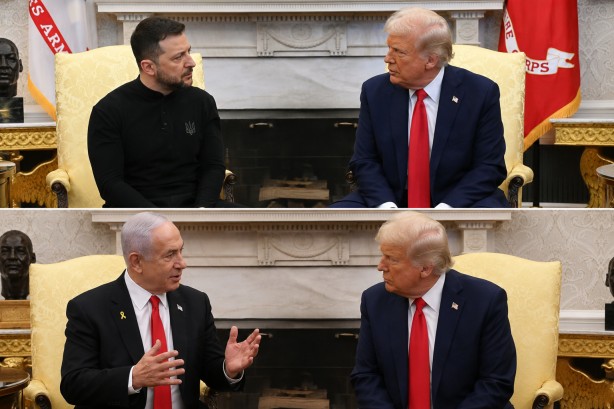
In a series of diplomatic engagements at the White House, U.S. President Donald Trump held discussions with Ukrainian President Volodymyr Zelenskyy and Israeli Prime Minister Benjamin Netanyahu. Although Trump characterized both meetings as fruitful, he refrained from sharing specific details. President Zelenskyy highlighted that their conversation centered around enhancing Ukraine’s air defense, with particular attention to the possibility of producing Patriot missile interceptors within Ukraine. Additionally, the leaders explored avenues to rejuvenate diplomatic dialogues.
Netanyahu’s meeting with Trump was his first in the Oval Office since the U.S.-Israel joint military operations against Iran earlier in the year. The agenda for their talks reportedly included discussions on regional security, the situation in Iran and Lebanon, and the ongoing efforts to widen the scope of the Abraham Accords. These discussions underscore the continuing evolution of Washington’s stance on the conflicts involving Ukraine and the Middle East, as both Kyiv and Israel seek to ensure sustained support from the United States.
The timing of these meetings reflects a significant moment in U.S. foreign policy, as the Trump administration navigates its strategic relationships with both Ukraine and Israel. For Kyiv, the focus is on bolstering its defense capabilities against potential threats, while Israel remains engaged in broadening regional alliances and countering adversarial influences, particularly from Iran.
President Zelenskyy expressed optimism about the outcomes of his dialogue with Trump, emphasizing the importance of defense cooperation in mitigating security challenges faced by Ukraine. The potential domestic production of missile interceptors stands as a crucial component of this collaboration, aiming to enhance the country’s self-reliance in defense.
Meanwhile, Prime Minister Netanyahu’s discussions with Trump signal a continued commitment to deepening U.S.-Israel ties, especially in the context of regional security dynamics. The focus on expanding the Abraham Accords indicates an ongoing pursuit of diplomatic breakthroughs that could reshape the geopolitical landscape of the Middle East. As these developments unfold, both Ukraine and Israel remain pivotal players in the broader strategic objectives of the United States.