
The Strait of Hormuz crisis is deepening pre-existing divisions between Western and Eastern approaches to Iran policy, as European and American governments frame the blockade primarily in terms of Iranian aggression requiring a military response while China and other Asian nations emphasise diplomacy, engagement, and their own economic relationships with Tehran. President Trump’s call for a naval coalition — directed at European allies and Asian partners alike — has exposed these divisions with unusual clarity, as each region’s governments respond according to their own calculus rather than any shared framework for managing Iran’s behaviour.
Iran’s blockade of the strait began in late February as retaliation for US-Israeli airstrikes, generating the most severe oil supply disruption in history. One-fifth of global oil exports ordinarily flow through the passage. Tehran has attacked sixteen tankers and declared vessels heading for American or allied ports to be legitimate military targets. The response to this challenge has been fundamentally different depending on whether the responding government views Iran primarily as an adversary to be confronted or a relationship to be managed.
European responses have reflected a combination of military caution and diplomatic posturing. France ruled out warship deployment while fighting continued but proposed a future defensive escort mission. The UK explored lower-risk drone options. Germany questioned the EU’s Aspides mission’s effectiveness. The EU is examining whether to expand the Aspides mandate — a process that reflects the European preference for institutional rather than unilateral responses to security challenges. None of these responses has produced concrete military commitments, but they share a broadly adversarial framing of Iran’s behaviour as requiring eventual pushback.
Asian responses have been shaped more explicitly by economic dependencies and existing relationships. Japan and South Korea — both heavily dependent on Gulf crude and significant partners of the United States — have cited very high thresholds and careful deliberation as reasons for non-commitment. China has framed its role entirely in terms of diplomatic communication and constructive engagement, reflecting Beijing’s view of Iran as a partner rather than an adversary. The contrast between Western framing and Eastern framing of the crisis reflects deeper differences in how these regions understand their relationships with Tehran.
China’s engagement with Iran is the most consequential expression of the Eastern approach. Beijing is reportedly in discussions with Tehran about allowing tankers to pass safely — a process that leverages the relationship rather than confronting it. The Chinese embassy confirmed China’s commitment to constructive regional communication and de-escalation. US Energy Secretary Chris Wright expressed hope that China would prove a constructive partner, acknowledging implicitly that resolving the crisis requires engagement with those who maintain relationships with Iran rather than just those who view it as an adversary.
Hormuz Crisis Deepens Divisions Between East and West on Iran Policy
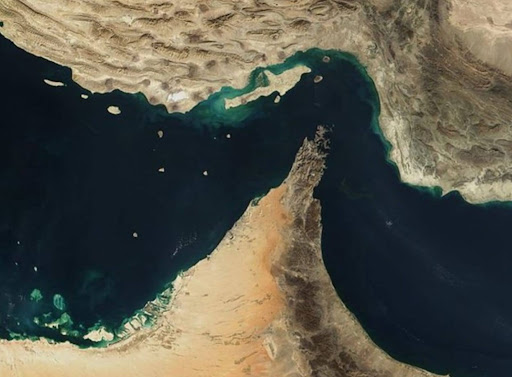
Photo Credit: Jacques Descloitres | NASA via Flickr
25