
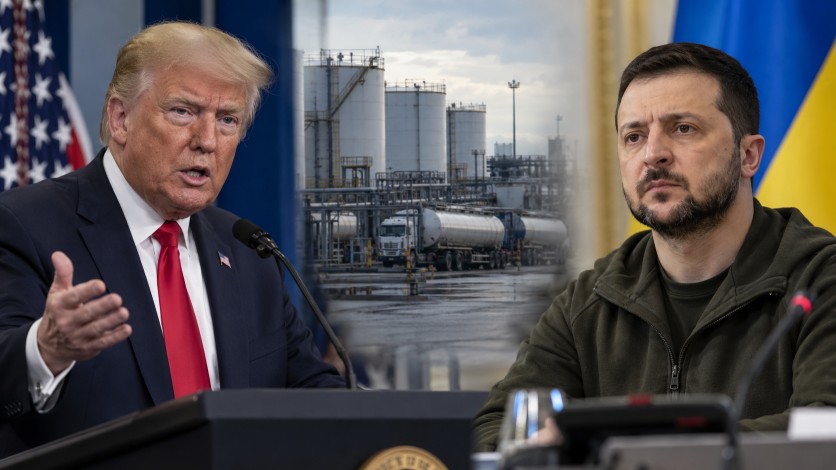
Tensions between the United States and Ukraine have escalated following comments made by US President Donald Trump, who suggested that Ukraine requires a “new leader” to effectively negotiate an end to the ongoing conflict with Russia. This statement came shortly after Trump announced a controversial agreement to purchase significant amounts of Russian diesel, a decision met with strong criticism from Ukrainian President Volodymyr Zelenskyy and European allies.
Trump criticized Zelenskyy for allegedly missing opportunities to secure peace with Russia, implying that fresh leadership could facilitate a resolution. These remarks have further complicated diplomatic relations between Washington and Kyiv, as efforts to end the war remain fraught with uncertainty.
President Zelenskyy condemned the diesel agreement, asserting that it undermines international sanctions on Russian energy exports and could provide Moscow with additional funds to support its military operations. He labeled the deal as a “gift” to Russian President Vladimir Putin and expressed concern that increased energy revenue could prolong Russia’s offensive.
The Ukrainian leader also linked the renewed Russian attacks on civilian targets, including recent strikes on the southeastern city of Zaporizhzhia, to the agreement. Zelenskyy reported casualties, including children, and noted widespread power outages in Kyiv as evidence of the ongoing threat to Ukraine’s energy infrastructure. He emphasized that any easing of international pressure is perceived by Russia as an opportunity to intensify its military campaign.
European countries have echoed Ukraine’s concerns, with governments fearing that additional Russian energy revenue could erode the effectiveness of sanctions imposed following the invasion. European leaders, including those from Germany and Sweden, have reaffirmed their commitment to maintaining economic pressure on Moscow and are considering further restrictions targeting Russian-linked individuals and entities.
A point of contention between Trump and Zelenskyy is Ukraine’s strategy of targeting Russian oil refineries with long-range attacks. Trump argued that such actions exacerbate fuel supply pressures, whereas Zelenskyy believes that these strikes weaken Russia’s ability to finance its war efforts.
Reports suggest that US officials have considered limiting intelligence-sharing with Ukraine if Kyiv continues its attacks on Russian energy infrastructure, potentially complicating Ukraine’s military operations and air defense capabilities. This dispute highlights the growing divisions among Ukraine’s international partners regarding strategies to end the war, with the US pursuing economic and diplomatic measures for a settlement and Ukraine insisting on preventing Russia from obtaining resources to sustain its military campaign.