
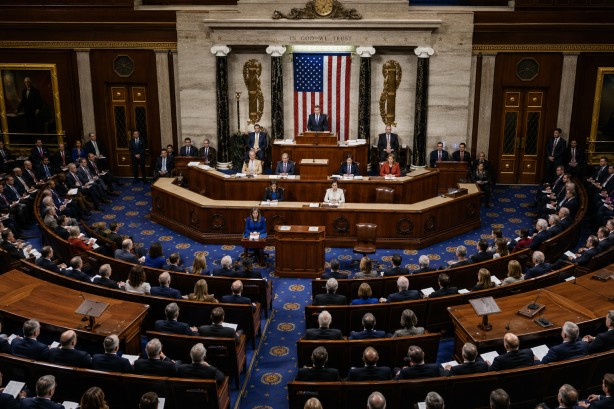
The U.S. House of Representatives has taken a crucial step in advancing a significant military spending bill, known as the National Defense Authorization Act (NDAA), which totals $1.15 trillion. The bill passed with a narrow margin of 216-212, predominantly along party lines, and now awaits consideration by the Senate. This package includes substantial pay raises of 5% to 7% for military personnel and emphasizes bolstering the country’s defense capabilities through considerable investments.
Republican leaders have championed the bill as a necessary measure for modernizing U.S. military forces and enhancing national security. In contrast, most Democrats have criticized the legislation, arguing that the proposed defense budget is excessive, especially when juxtaposed with cuts to domestic programs. The debate over the bill has been further complicated by ongoing political tensions related to President Donald Trump’s military actions in the Middle East, particularly his decision to order strikes against Iran without seeking congressional approval. This move raised concerns among some lawmakers about deepening U.S. military involvement in the region.
The NDAA has also become a battleground for discussions on voting legislation. Democrats have voiced strong opposition to the inclusion of provisions supported by President Trump, which call for stricter voter identification laws and limitations on mail-in voting. They contend that these measures are inappropriate for a defense-focused bill and could undermine voting rights.
Throughout the legislative process, numerous amendments were proposed and debated. Notably, the House rejected an amendment aimed at terminating U.S. military aid to Ukraine. Other proposed changes, such as those addressing transgender military policies and defense healthcare, sparked intense discussion among lawmakers. Despite these debates, the bill continues to move forward, reflecting the complex interplay of defense priorities and broader political issues.
In a related development, House Republicans have approved a budget framework allocating $73 billion for military operations involving Iran. Although this figure is significant, it remains below the broader funding levels sought by the Pentagon. As the Senate prepares to review the NDAA, the outcome will be closely watched, with implications for U.S. military strategy and domestic policy debates.